
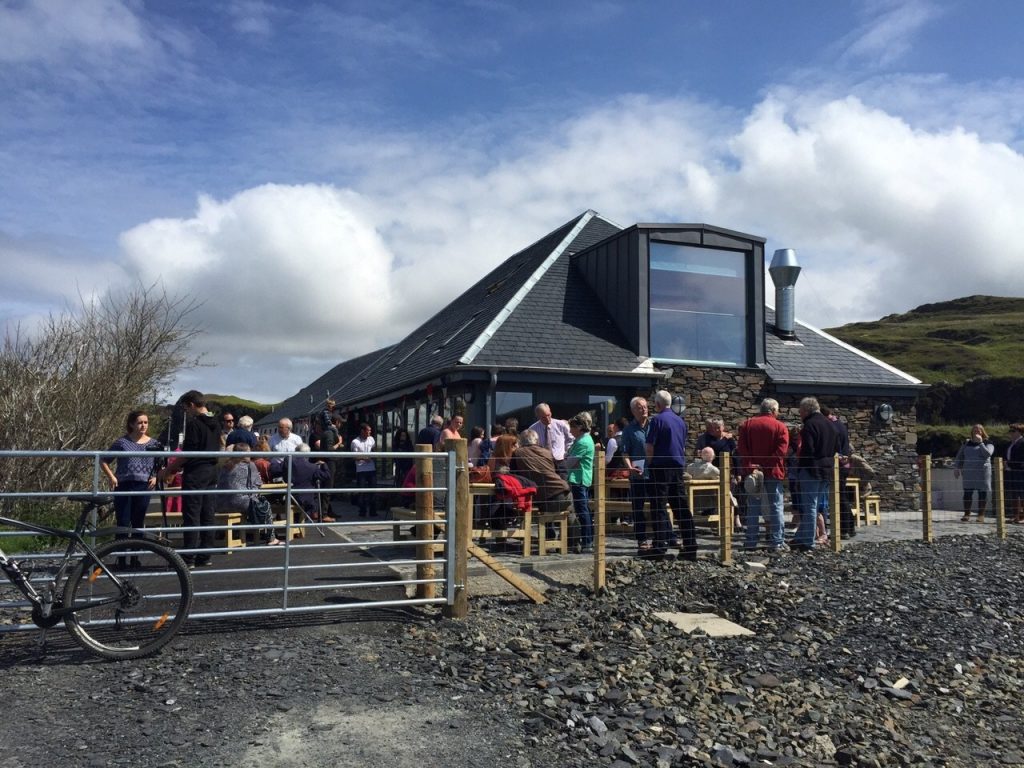
Like many islanders on Scotland’s remote and windy west coast, residents of Luing are seeing the effects of climate change first hand.
While poor weather has always been a feature of life on the island, global heating is leading to stronger and more frequent storms. With this comes a greater risk of power outages from fallen trees and other debris.
“Any storm that comes this way, you come to know that your power is going to go out,” says Morag Mawson, of Isle of Luing Community Trust.
The trust was set up 20 years ago to support the sustainable development of the island. Today, much of its activity – including exhibitions, talks, music, education and social events – happens at the Atlantic Islands Centre, a visitor and community centre with a café in Cullipool.
Now, Morag is leading efforts to turn the centre into a “resilience hub”, where residents can go during storm power outages to stay warm, fed and connected to the internet. This is thanks to a newly installed solar panel and battery system, which can keep the lights on for up to three days without grid power.
Morag Mawson of Isle of Luing Community Trust
‘Huge impact’ of power cuts
Last year’s Storm Éowyn cut off power for around 1 million homes across Scotland and Northern Ireland. It left Luing without electricity for more than 50 hours.
“It’s a huge impact when the power goes off,” says Morag.
With the internet down and a patchy mobile signal, people struggle to send messages or make calls, she explains.
Freezers switch off and food starts to spoil. Many homes have fully electric heating, while even those with oil boilers rely on electric pumps to move the fuel around. Elderly or vulnerable residents are more likely to injure themselves moving around in the dark, too.
Applying for funding
To cover the cost of rooftop solar panels and a battery, Morag applied for grant funding from the Scottish Government’s Community and Renewable Energy Scheme (CARES).
She is first to admit that this was unfamiliar territory: “I'd never done a grant application before in my life.”
“I had never heard of lots of the things that I had to do,” she says, such as working out if they would need planning permission, a building warrant or a structural engineer, “but I found our local development officer very supportive.” She got quotes from five different contractors for the cost of the installation.
Within six weeks of applying, they received the good news that they would receive the requested grant of around £29,000.
Despite a few delays (due to more poor weather, battery stock shortages and the complicated business of submitting planning permission documents), the shiny new solar panels and battery were up and running by the start of April.
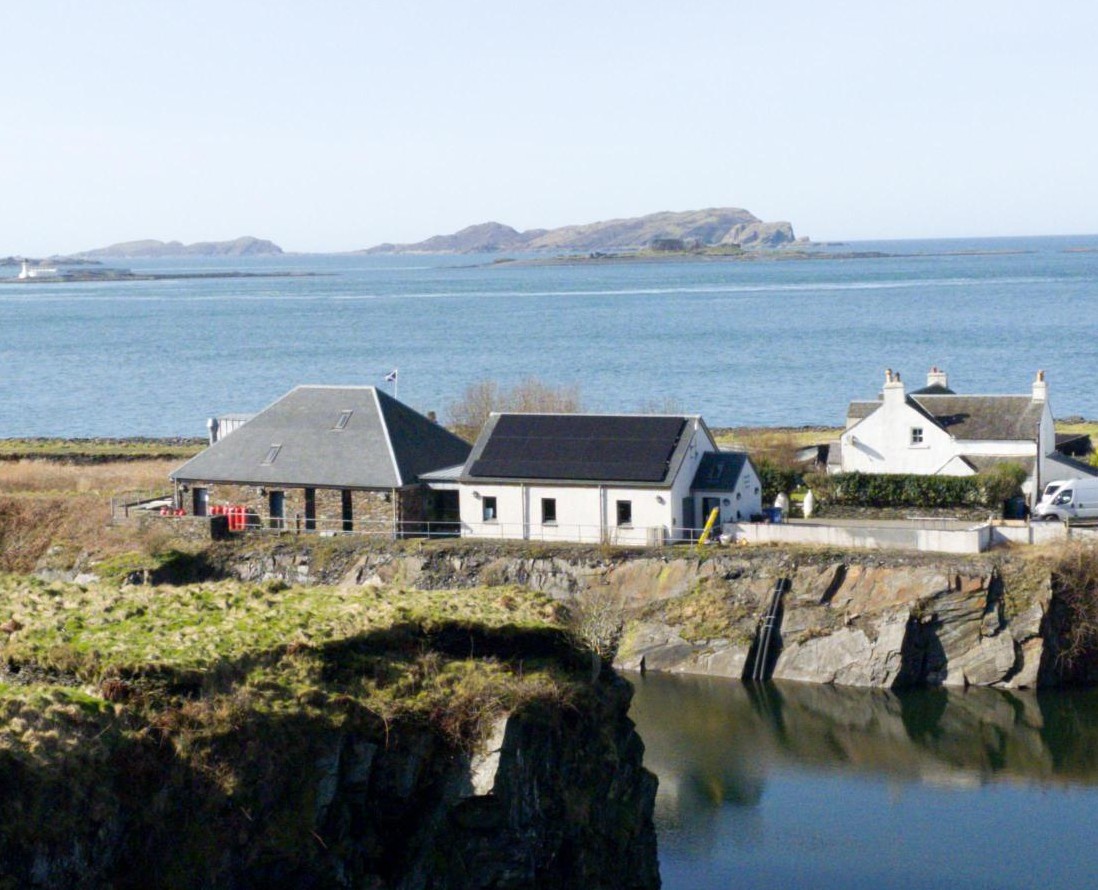
Newly installed solar panels on the Atlantic Islands Centre
Immediate savings
Any doubts they might have had about the effectiveness of solar power in Scotland’s notoriously cloudy west coast were quickly dispelled.
Morag recounts: “As soon as we switched it on, we could see that even on a grey day, there was power coming in.”
In just a month, the Atlantic Islands Centre has already seen its electricity bills drop. They now hope to use the money saved on energy to pay for other projects to help people on the island, says Morag.
“It's a great payback. It may be that people will benefit without even knowing.”
‘It keeps the business going’
In our increasingly unpredictable world, Morag reflects that having a more secure energy supply is reassuring on multiple levels.
“It gives you that surety that you might be able to carry on,” she says. “We could still open the centre if we had a power outage for, I think, up to three days. It keeps the business going and it keeps those people working that are reliant on the salary.”
For any small business that is struggling to stay competitive, being able to keep operating during a power outage, albeit at a reduced level, could make all the difference.
Morag sums it up: “In this kind of world, if you don't fulfil orders, people soon jump to someone else.”