
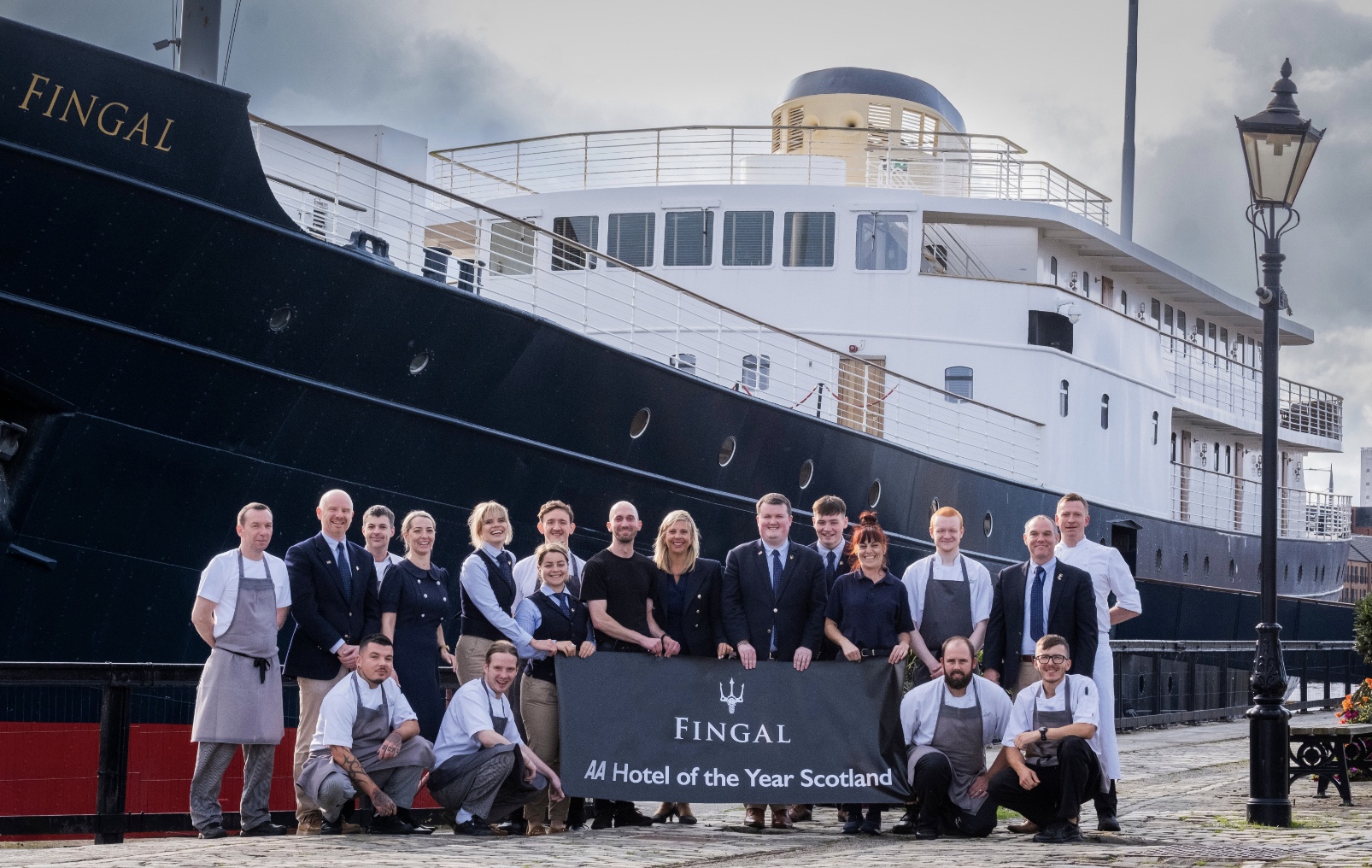
The Fingal Hotel is a former working vessel, converted into a 22-room luxury floating hotel in 2019. It once ferried lighthouse keepers, essential supplies and maintenance staff to lighthouses along Scotland’s coastline.
Today, the Fingal Hotel is berthed in Leith, north of Edinburgh, and belongs to the same trust as the nearby Royal Yacht Britannia.
Charlie Granleese, guest experience and environment manager, attended Climate Springboard’s business accelerator programme in 2025. It has been tricky to find time to deliver on their environmental ambitions in such a busy industry, explains Charlie. So, instead of going it alone, Fingal has found success in working with other organisations to leverage their experience and expertise in data-gathering and carbon-cutting.
He thinks businesses should adopt a “collective mindset” when it comes to net zero action, rather than looking for a competitive edge. “Finding the right partners is so important,” says Charlie.
Here are some examples of how these collaborations are shaping up:
Northern Lighthouse Board 
The Northern Lighthouse Board (NLB) was an obvious partner, as the former owner of the Fingal. Besides, it was NLB’s sustainability coordinator Mike McBride who first recommended the Climate Springboard programme to Charlie. The two now meet regularly to share best practices, particularly relating to gathering the data needed to calculate their greenhouse gas emissions. Just recently, Mike invited Charlie to attend a meeting of the NLB’s green team.
Water of Leith Conservation Trust 
Charlie reached out to local river charity Water of Leith Conservation Trust to ask what Fingal could do to support biodiversity on its (small) estate. They put him them in contact with the team at Royal Botanic Garden Edinburgh, who helped Charlie to choose appropriate wildflowers to plant at the seashore area. The result is a bird- and insect-friendly meadow that connects to a network of wildlife habitats along the Water of Leith.
Keep Scotland Beautiful 
The Fingal Hotel chose to work with Keep Scotland Beautiful to apply for Green Key accreditation, a global mark of recognition of ‘environmental excellence’ in tourism and hospitality businesses. This means Fingal gets assessed each year on a range of criteria by an independent jury. Daunting though it may seem, Charlie says that getting external validation has made it easier to get colleagues on board with climate initiatives – because they trust that any changes they are being asked to make are grounded in best practice.
Goals and challenges
Right now, Charlie is focused on completing a baseline carbon footprint by the middle of 2026. But getting the necessary data (such as spend on purchased goods and services) is a challenge.
“People don't prioritise it as much as you’d like,” he says, himself included: “It’s not as much of my day as I’d like.”
He has ambitions to install solar panels or even a small wind turbine on site to supply clean electricity to the hotel, as well as electric vehicle charging points in the carpark for guests. But with limited space on land to play with and restrictions due to nearby road infrastructure, these won’t happen overnight.
Still, Charlie confides: “We’re not perfect but we are proud of where we are.”