
Scotland is aiming to reach net-zero carbon emissions by 2045. This will mean transforming our economy, which is currently reliant on polluting fossil fuels.
If you work at a small or medium-sized business and are daunted by the prospect of this, that’s completely normal.
That’s why this guide will break down an important first step: writing a net-zero strategy. Or, depending on who you ask, a climate strategy. Or a carbon reduction plan! Don’t worry – these all broadly mean the same.
It’s best to keep it simple and not get bogged down creating a lengthy document. The actions you take matter more than any PDF or PowerPoint presentation.
We recommend you include the following sections:
In this guide, we will explain each section in more detail. Let’s get started.
1) Motivations
Start by outlining why you have created this climate strategy.
We speak to Scottish SMEs every week as part of our Climate Springboard business support programme. Here are the most common things they cite as motivation for starting their net-zero journey:
Customers: Large customers are increasingly asking for a Carbon Reduction Plan from their suppliers. UK regulation requires “large” companies to report the emissions from their wider supply chain.
Funding: Some business support agencies require a plan to reach net zero by 2045 to access grants.
Regulation: Scotland has already introduced low-emission zones in cities and a gas boiler ban in new buildings. Having a climate strategy is a way to keep ahead of future regulatory requirements and avoid shocks when they come into force.
Risk: Climate change is expected to cause more frequent and severe flooding in Scotland (and many other effects). Reducing emissions to net-zero can help reduce this risk in the long term.
2) Vision
The sheer scale of the climate crisis can make it difficult to motivate staff. Small actions now can feel disconnected from the bigger picture. A compelling net-zero vision can help bring your colleagues and stakeholders together around a programme of action.
Take some time to imagine what your business will look like in 2045.
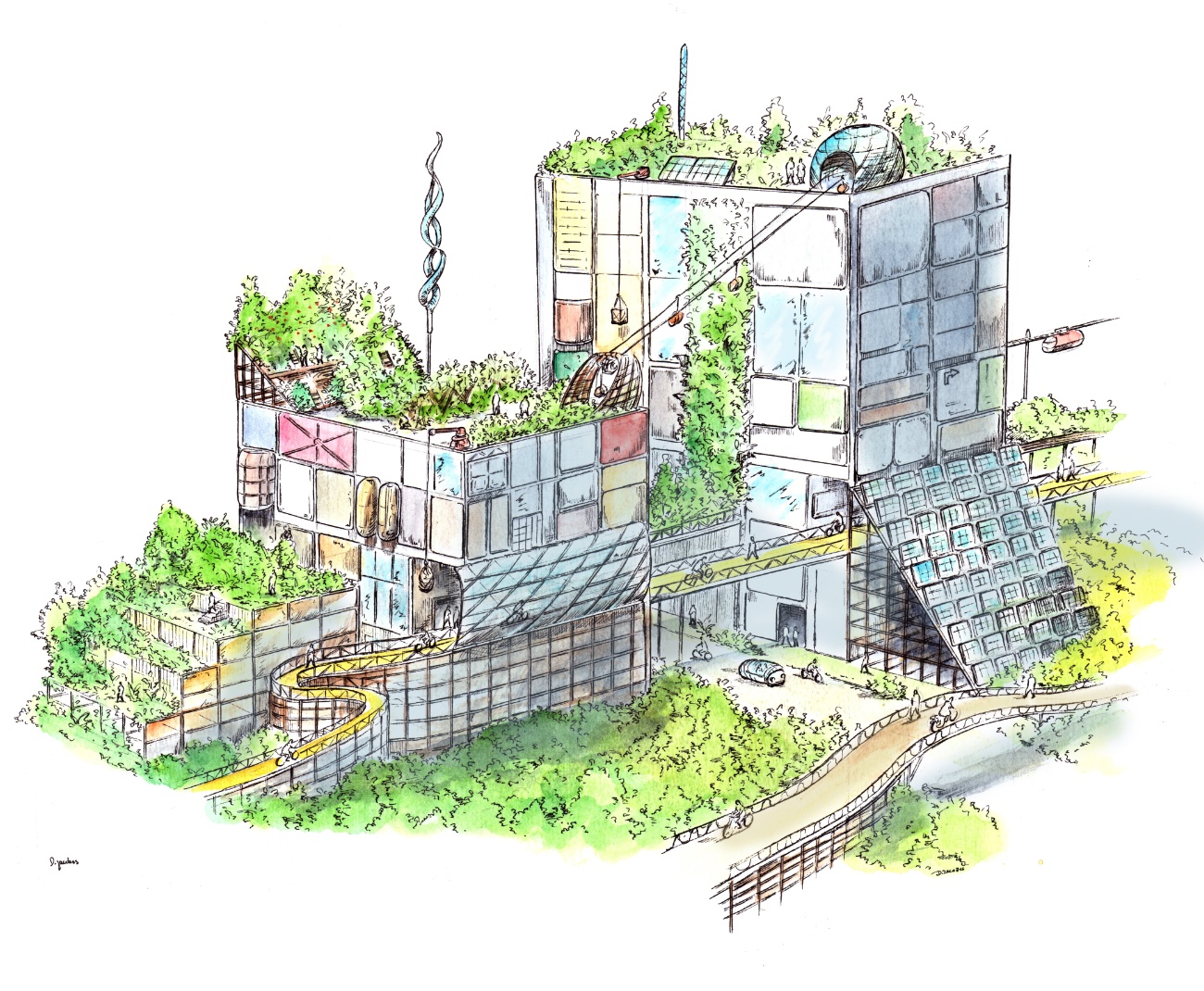
An office block re-imagined in solarpunk style. Having a bold vision for the future can inspire hope and a proactive response to the climate crisis (Image: Dustin Jacobus)
3) Carbon footprint
Your company carbon footprint is a measure of the total greenhouse gases emitted directly and indirectly by your business over one year, measured in tonnes of CO2 equivalent (tCO2e).
This is essential. To effectively measure how much you have reduced your emissions in future, you need a starting point. This is called your ‘baseline’.
If you already have a carbon footprint from a previous year, use this as your baseline. However, you must update your footprint each year with new data.
Read our guide here for a detailed walk-through of the process: How to create a carbon footprint (PDF)
4) Targets
Nearly there! It’s time to set some goals.
You should be clear about how much you’ll reduce your emissions by, and by when. This might feel daunting – where do you even begin?
Firstly, remember that customers and funders expect your target to be in line with government targets. You should also be realistic about what’s possible for your organisation. Lastly, don’t worry about “getting it right” first time. You can and should review your targets regularly.
We recommend the following as a good starting point:
Consider choosing a target date for when you'll reset your boundary (read more) or start measuring Scope 3 emissions.
Don’t forget to create a monitoring process! Decide who is responsible for checking your company’s progress toward these goals and when it should happen.
If you’d like more detailed support on setting targets, try these:
5) Actions
Finally, outline the actions you will take as a business to reach these goals.
Exactly which interventions to make depends on the nature of your business and where most of your emissions come from. However, these are useful guiding principles:
-
 Start with Scope 1 and 2 – It’s easy to get overwhelmed by the scale of the challenge. Take actions where you have a direct impact.
-
 Reduce demand first – 10% of UK emission reductions will need to come from using less energy in the first place, according to the CCC.
-
 Focus on one area – Start with one source of emissions (e.g. heating) and bring it down before moving onto the next.
Reach out to us for free advice tailored to your business at ClimateSpringboard@ed.ac.uk
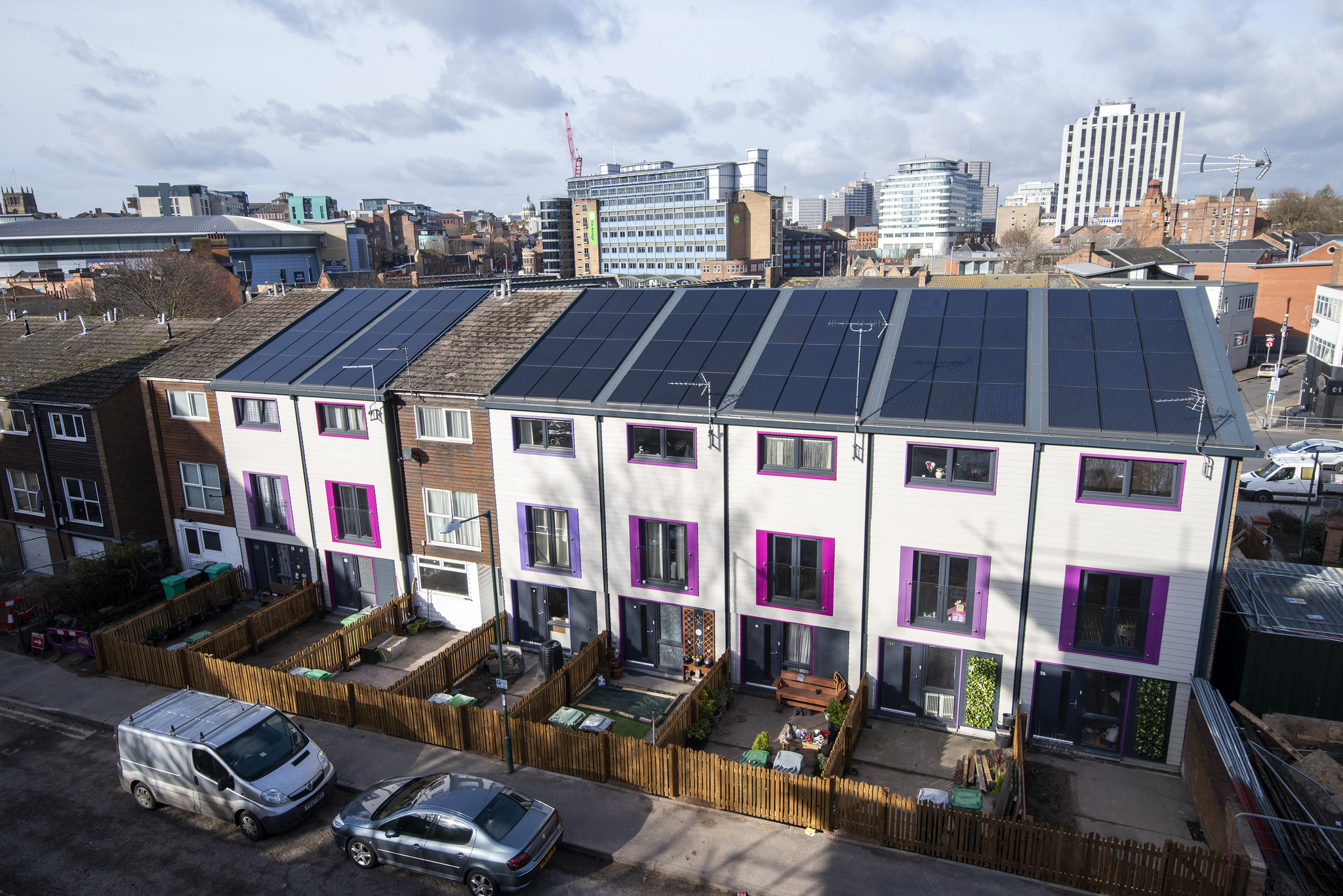
Homes retrofitted as part of a 2019 net-zero pilot scheme in Nottingham. It includes a new thermally efficient facade, solar roof and ‘energy hub’ comprising air or ground source heat pumps and optional batteries (Image: Tracey Whitefoot)
Keep up the momentum
If you'd like a handy starting point, we’ve created a free Carbon Reduction Plan template, designed to comply with the Greenhouse Gas Protocol international standard.
If you are still rearing to go, then we invite you to sign up for Climate Springboard, our free business support programme. It’s designed to equip SMEs in Scotland with the knowledge and tools to start out on their journey to net zero.
It lasts just over a month and is completely free. At the end, attendees leave with a company carbon footprint, a template for a long-term net-zero strategy, and a tailored list of quick ways to lower emissions and costs.